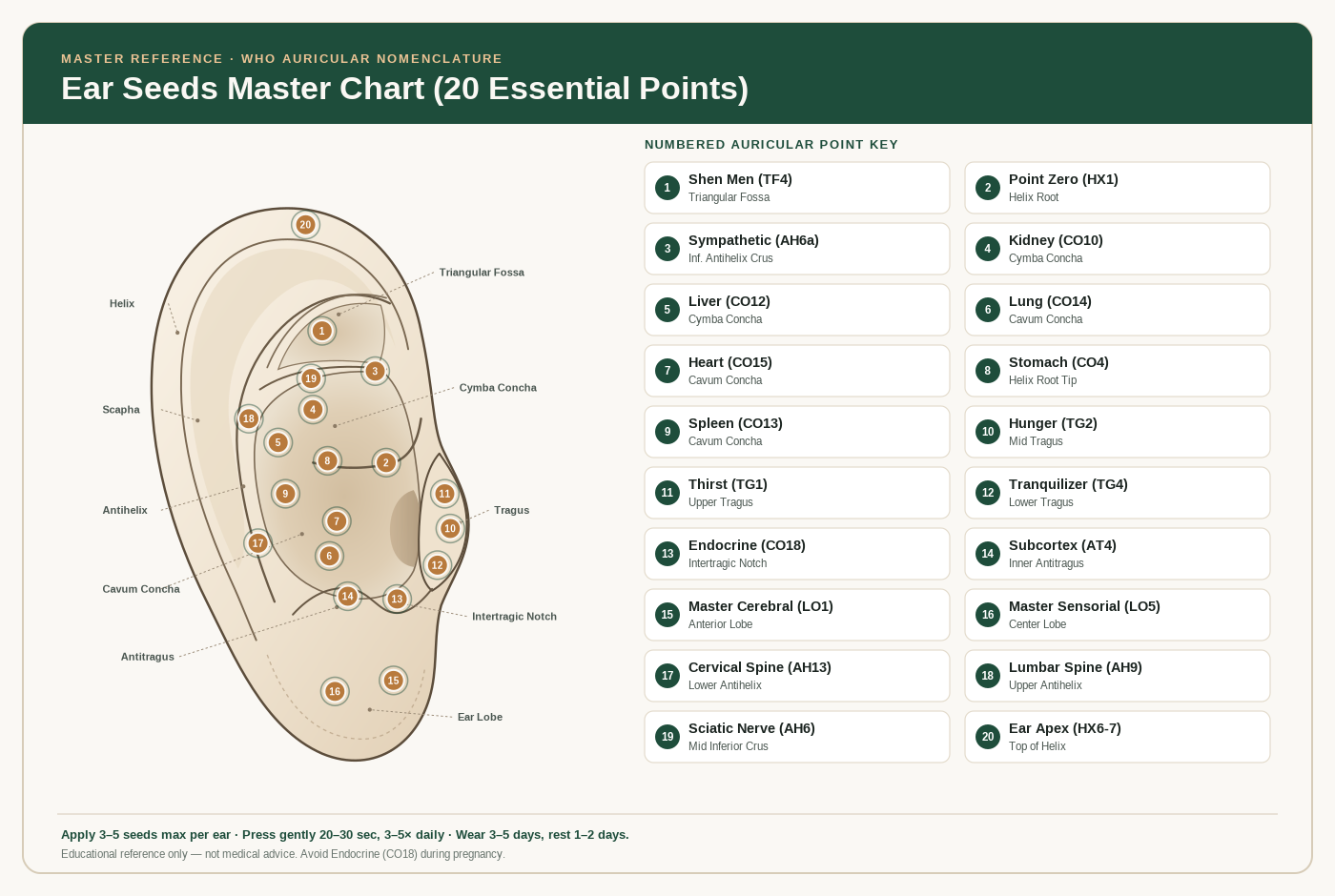
Master Reference Map · 20 Points

Complete Ear Seeds Chart (20 Essential Auricular Points)

A clinically structured ear seeds chart covering all 10 outer-ear anatomical zones—from Shen Men (TF4) and Point Zero (HX1) to Hunger (TG2), Heart (CO15), and Cervical Spine (AH13). Click any point to inspect exact placement steps or jump straight to the reference table below.

Master 20-Point Ear Seeds Chart (Interactive)

Select a symptom protocol or click any numbered point on the outer ear for placement steps.

Right Ear (Lateral View) · WHO Nomenclature
SUPERIOR (APEX)← POSTERIORANTERIOR (FACE) →INFERIOR (LOBE)HelixScaphaTriangular FossaAntihelixCymba ConchaCavum ConchaTragusIntertragic NotchAntitragusEar Lobe1. Shen Men (Spirit Gate) (TF4) — Triangular Fossa12. Point Zero (Ear Center) (HX1) — Helix Root (Crus of Helix)23. Sympathetic (Autonomic Point) (AH6a) — Inferior Antihelix Crus (Anterior Junction)34. Kidney (CO10) — Superior Cymba Concha45. Liver (CO12) — Posterior-Inferior Cymba Concha56. Lung (CO14) — Lower Cavum Concha67. Heart (CO15) — Center of Cavum Concha78. Stomach (CO4) — Medial Tip of Helix Root89. Spleen (CO13) — Posterior-Upper Cavum Concha910. Hunger (Appetite Control) (TG2) — Midpoint of Tragus1011. Thirst Point (TG1) — Upper Tragus1112. Tranquilizer (Valium Point) (TG4) — Lower Tragus Border1213. Endocrine (CO18) — Intertragic Notch1314. Subcortex (Dermis / Brain) (AT4) — Inner Wall of Antitragus1415. Master Cerebral (Neurasthenia) (LO1) — Anterior-Inferior Ear Lobe1516. Master Sensorial (Eye Point) (LO5) — Center of Ear Lobe1617. Cervical Spine (AH13) — Lower Antihelix Ridge1718. Lumbar & Sacral Spine (AH9) — Upper Antihelix Stem1819. Sciatic Nerve (AH6) — Mid Inferior Antihelix Crus1920. Ear Apex (Allergy / Tension) (HX6-7) — Superior Crest of Helix20
Selected PointActive Protocol PointOther Master Points (Clickable)

All 20 Master Auricular Points

Explore all 20 foundational auricular points using standardized WHO alphanumeric codes (TF, HX, AH, CO, TG, AT, LO). Click any marker to inspect step-by-step placement, nerve supply, stimulation schedule, and safety notes.

#1 Shen Men (Spirit Gate)

TF4
Pinyin: Shén Mén (神门)Zone: Triangular Fossa

The cornerstone master calming point of auriculotherapy, included in almost every stress, sleep, pain, and NADA protocol.

Anatomical Innervation: Auriculotemporal nerve & minor auricular vagal overlap

How to Locate & Place the Ear Seed

  1. Clean the upper outer ear thoroughly with a 70% isopropyl alcohol pad and wait 30 seconds until completely dry.
  2. Locate the triangular hollow (Triangular Fossa) near the top-front of the ear, nestled between the upper and lower branches of the antihelix.
  3. Place the ear seed in the posterior-upper corner (lateral apex) of that triangular depression, just above the junction where the two cartilage ridges meet.
  4. Press gently with your index fingertip for 5 seconds to seat the adhesive edges smoothly against the curved cartilage.

Traditional Auriculotherapy Uses

  • Calming nervous tension, racing thoughts, and acute stress response
  • Preparing the autonomic nervous system for deeper sleep onset
  • Modulating perceived discomfort in headache, musculoskeletal pain, and withdrawal protocols
  • Core anchor point in the NADA 5-point auricular protocol

Stimulation & Wear Schedule

Press gently for 20–30 seconds, 3–5 times daily (and once during slow exhale breathing before bed). Wear 3–5 days, remove cleanly, and rest the ear 1–2 days before reapplying.

Safety & Contraindications: Generally well tolerated; pregnant individuals should consult an OB-GYN or licensed acupuncturist before using Shen Men or strong calming ear protocols. Remove immediately if redness or aching develops.
Quick Lookup Directory

Full 20-Point Ear Seeds Reference Table

Cross-reference every point number from the chart above with its Pinyin, Chinese name, WHO alphanumeric code, anatomical zone, and primary wellness focus.

Complete 20-Point Auricular Acupressure Reference Table
#Point Name & PinyinWHO CodeAnatomical ZonePrimary Traditional Uses
1Shen Men (Spirit Gate)
Shén Mén (神门)
TF4Triangular FossaThe cornerstone master calming point of auriculotherapy, included in almost every stress, sleep, pain, and NADA protocol.
Pregnancy caution applies
2Point Zero (Ear Center)
Ěr Zhōng (耳中)
HX1Helix Root (Crus of Helix)Dr. Paul Nogier’s primary homeostatic balancing point, positioned in the small tactile notch along the horizontal root of the helix.
3Sympathetic (Autonomic Point)
Jiāo Gǎn (交感)
AH6aInferior Antihelix Crus (Anterior Junction)Primary autonomic nervous system regulator used in NADA, anxiety, tension headache, and digestive spasm protocols.
4Kidney
Shèn (肾)
CO10Superior Cymba ConchaLocated inside the vagus-innervated upper concha; traditionally linked to restorative energy, sleep depth, fear/stress resilience, and the NADA protocol.
5Liver
Gān (肝)
CO12Posterior-Inferior Cymba ConchaPosterior cymba concha point traditionally associated with emotional release, irritability, muscular tension, and the NADA 5-point protocol.
6Lung
Fèi (肺)
CO14Lower Cavum ConchaPositioned in the lower central concha surrounding the Heart point; key NADA 5-point site linked to breath regulation and vagal calm.
7Heart
Xīn (心)
CO15Center of Cavum ConchaSits in the exact deepest center of the lower concha bowl; paired with Shen Men in sleep and anxiety protocols to quiet mental agitation.
8Stomach
Wèi (胃)
CO4Medial Tip of Helix RootLocated right where the horizontal helix root fades into the central concha; central point for digestion, nausea, and mindful appetite pacing.
9Spleen
Pí (脾)
CO13Posterior-Upper Cavum ConchaPositioned in the upper-posterior cavum concha directly below the Liver point; classically paired with Stomach for digestion, bloating, and worry.
10Hunger (Appetite Control)
Jī Diǎn (饥点)
TG2Midpoint of TragusThe signature tragus point in appetite-awareness and weight-management ear seed protocols, pressed briefly before meals to support mindful satiety.
11Thirst Point
Kě Diǎn (渴点)
TG1Upper TragusUpper tragus point positioned just above the Hunger point; traditionally included in hydration balance and appetite-awareness routines.
12Tranquilizer (Valium Point)
Zhèn Jìng (镇静)
TG4Lower Tragus BorderLower tragus calming point famed in French and Chinese auriculotherapy for easing acute nervous jitteriness and daytime overwhelm.
13Endocrine
Nèi Fēn Mì (内分泌)
CO18Intertragic NotchLocated inside the U-shaped intertragic notch; traditional master point for hormonal equilibrium and metabolic protocols—with an important pregnancy caution.
Pregnancy caution applies
14Subcortex (Dermis / Brain)
Pí Zhì Xià (皮质下)
AT4Inner Wall of AntitragusPositioned along the inner surface of the antitragus; key neurological calming point in sleep, headache, and pain-perception protocols.
15Master Cerebral (Neurasthenia)
Shén Jīng Shuāi Ruò (神经衰弱点)
LO1Anterior-Inferior Ear LobeNogier’s prefrontal/cerebral master point on the anterior ear lobe, prized in sleep and anxiety routines for easing overthinking and worry.
16Master Sensorial (Eye Point)
Yǎn (眼)
LO5Center of Ear LobeExact center of the ear lobe (classic standard piercing location); traditionally linked to eye strain relief and sensory decompression.
17Cervical Spine
Jǐng Zhuī (颈椎)
AH13Lower Antihelix RidgeLower segment of the antihelix spinal ridge corresponding to the C1–C7 neck vertebrae in inverted-fetus mapping.
18Lumbar & Sacral Spine
Yāo Dǐ Zhuī (腰骶椎)
AH9Upper Antihelix StemUpper segment of the antihelix ridge mapping to the lower back (lumbar and sacral vertebrae) in the inverted-fetus microsystem.
19Sciatic Nerve
Zuò Gǔ Shén Jīng (坐骨神经)
AH6Mid Inferior Antihelix CrusCentered along the lower horizontal branch of the antihelix (inferior crus), traditionally paired with Lumbar Spine for lower-back and hip-to-leg discomfort.
20Ear Apex (Allergy / Tension)
Ěr Jiān (耳尖)
HX6-7Superior Crest of HelixLocated at the highest superior fold of the outer ear rim; traditionally used in headache, heat/tension relief, and seasonal allergy charts.
High-Resolution Vector Asset

Downloadable Master Ear Seeds Poster

Need a clean reference sheet to save on your phone, pin for study, or print for home use? Download our standalone vector master chart directly, or customize a single-symptom sheet (Sleep, Anxiety, Weight Loss, or NADA 5-Point) inside our Printable Ear Chart Studio.

New to applying seeds? Follow our step-by-step Ear Seed Placement Chart for alcohol skin prep, angled-tweezers technique, and safe 3–5 day wear cycles, or read the Complete Ear Seeds Guide.

Master 20-point ear seeds chart with numbered points and WHO auricular codes
High-resolution 20-point ear seeds master reference (SVG vector, crisp at any print size).

Frequently Asked Questions

What is the most important point on an ear seeds chart?

Shen Men (TF4), located in the lateral corner of the Triangular Fossa, is the most universally used anchor point on virtually every ear seeds chart. It is commonly paired with Point Zero (HX1) on the helix root and 1 to 3 targeted symptom points.

Why do ear seeds charts use codes like TF4, CO15, and TG2?

Those alphanumeric prefixes follow the World Health Organization (1990) International Auricular Nomenclature: TF = Triangular Fossa, HX = Helix, AH = Antihelix, CO = Concha, TG = Tragus, AT = Antitragus, and LO = Ear Lobe. Standardized codes make it easier to compare Chinese and Western auriculotherapy charts accurately.

Can I download and print this 20-point ear seeds chart?

Yes. Use the Download PNG, Pinterest Poster PNG, Download SVG, or Print / Save PDF buttons directly above the interactive chart, or download our static high-resolution Master Chart SVG directly below.

Clinical References & Nomenclature Sources

Anatomical labels, alphanumeric codes, and physiological summaries on this page are cross-checked against published nomenclature standards and peer-reviewed anatomical literature:

  1. World Health Organization (1990). Report of the Working Group on Auricular Acupuncture Nomenclature. Lyon, France: World Health Organization. [Source]Establishes the standardized international alphanumeric codes (TF, HX, AH, CO, TG, AT, LO) used across our ear chart.
  2. Oleson, T. (2014). Auriculotherapy Manual: Chinese and Western Systems of Ear Acupuncture (4th ed.). Edinburgh: Churchill Livingstone / Elsevier. Cross-references Chinese auricular nomenclature with Paul Nogier’s French somatotopic inverted-fetus mapping.
  3. Peuker, E. T., & Filler, T. J. (2002). The nerve supply of the human auricle. Clinical Anatomy, 15(1), 35–37. [Source]Anatomical cadaver mapping demonstrating that the cymba concha is innervated primarily by the auricular branch of the vagus nerve (ABVN), while the tragus, helix, and lobe share trigeminal and cervical plexus innervation.
  4. National Center for Complementary and Integrative Health (NCCIH), National Institutes of Health. Acupuncture: Effectiveness and Safety. [Source]Federal evidence review summarizing clinical findings, safety considerations, and practitioner standards for acupuncture and related stimulation techniques.
  5. PubMed Clinical Literature Index (National Library of Medicine). Peer-reviewed trials and systematic reviews on auricular acupressure and Vaccaria ear seeds. [Source]Browse current randomized trials and meta-analyses evaluating auricular acupressure for insomnia, perioperative anxiety, pain, and appetite support.